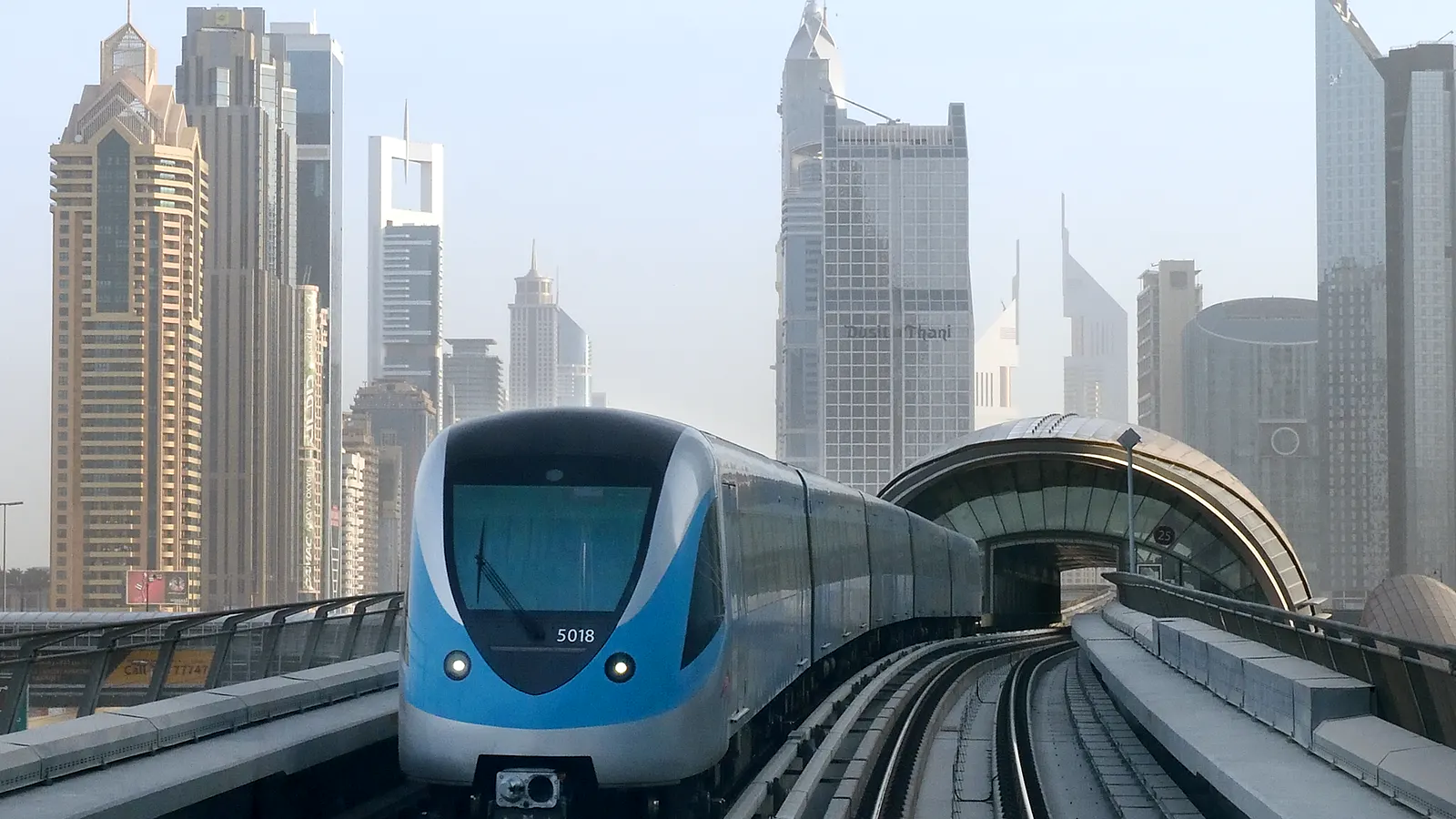

Thirty kilometres, fourteen stations and a date chosen to be remembered: 9 September 2029. The Blue Line is the new line of the Dubai Metro, and the authority building it, the RTA, credits it with a precise effect: land and property values up to 25% higher around the stations.
This is not a brochure slogan. It is an official estimate, and the history of the Dubai Metro supports it.
What the Metro has already taught us
On infrastructure, I prefer data to forecasts. CBRE measured what happened around the Metro between 2010 and 2022: homes within a fifteen-minute walk of a station rose 26.7%, against 24.1% for the Dubai average. In the ten-to-fifteen-minute band, growth reached 43.8%. And between 2018 and 2022, rents near stations beat the city average by almost ten points.
In plain terms, the Metro lifts prices and, above all, makes rental income steadier. For a landlord, it is the difference between an apartment that always lets and one that waits for a tenant.
Where it runs, station by station
The line has two branches. The first, 21 kilometres long, starts at Creek Interchange in Al Jaddaf, where it meets the Green Line, and runs through Dubai Festival City, Dubai Creek Harbour, Ras Al Khor, International City and Dubai Silicon Oasis to Dubai Academic City. The second, 9 kilometres long, starts at Centrepoint in Al Rashidiya, on the Red Line, and runs through Mirdif and Al Warqa to International City.
According to the RTA, the areas served will be home to around one million people by 2040. The landmark station, designed by Emaar at Dubai Creek Harbour, is built for more than 70,000 passengers a day from opening. And from the line, the international airport will be twenty minutes away.
The works are well under way
In May the RTA put progress at 20%, with a target of 30% by the end of the year. It is a project worth more than AED 20.5 billion: 15.5 kilometres underground and 14.5 elevated, with four underground stations, seven elevated ones and three interchanges. The tunnel boring machine, named Al Wugeisha, advances 13 to 17 metres a day from International City.
A fixed date and works moving forward. That is the picture investors want to see.
Two ways to read it as an investor
A new line rewards two kinds of area, on different timelines.
The first are areas already lived in and still under-served, such as International City, Silicon Oasis and Mirdif. Rental demand is already there, and the station widens it and makes it steadier. In Silicon Oasis, according to Bayut's third-quarter prices, gross apartment yields are around 7.9%, with studios averaging about AED 556,000.
The second are areas growing together with the line, such as Dubai Creek Harbour. There, the station arrives with the neighbourhood, and buying off-plan today means taking the keys roughly when the trains start running.
Either way, the lesson of the first Metro holds: walking distance to the station matters, not the name of the area. Two apartments in the same neighbourhood, one ten minutes from the station and one twenty-five, are two different investments.
Value moves along the whole route
Two projects in my Selection, The WOW Tower and The Archive, are in Dubai Residence Complex, a few minutes' drive from Silicon Oasis and Academic City, with entry prices from around AED 720,000. They are not on the line, and I do not present them that way: they sit in the part of the city the Blue Line is reshaping.
Metro lines have a readable cycle: announcement, construction, opening. Value moves along the whole route, not on the day the ribbon is cut. Today we are in the middle.
If you are looking at one of these areas, to let it out or to sell at handover, write to me: we will look at the distance to the stations before the price. I read every message personally and reply within 24 hours.
Antonio